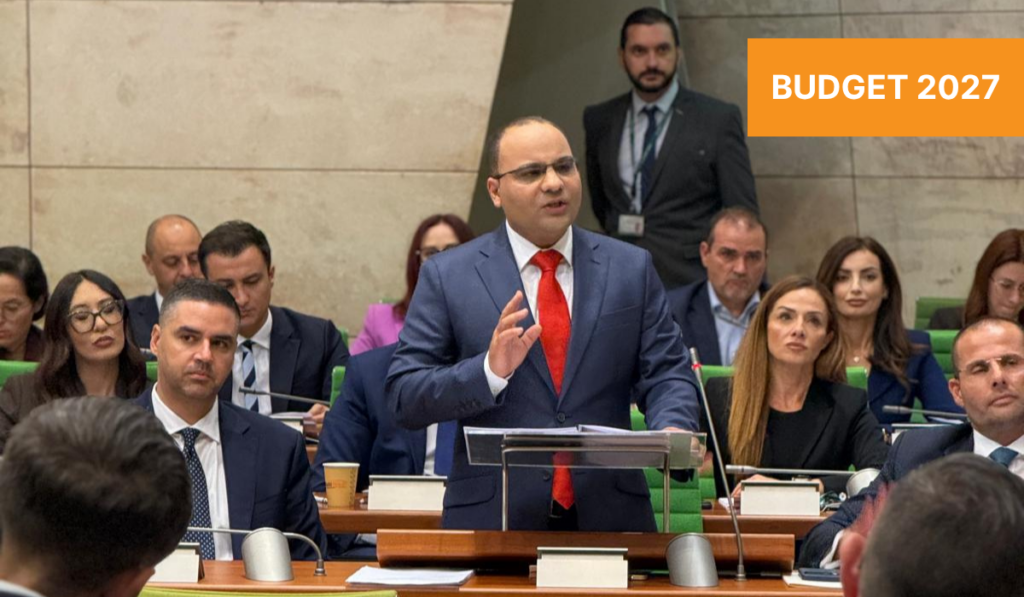
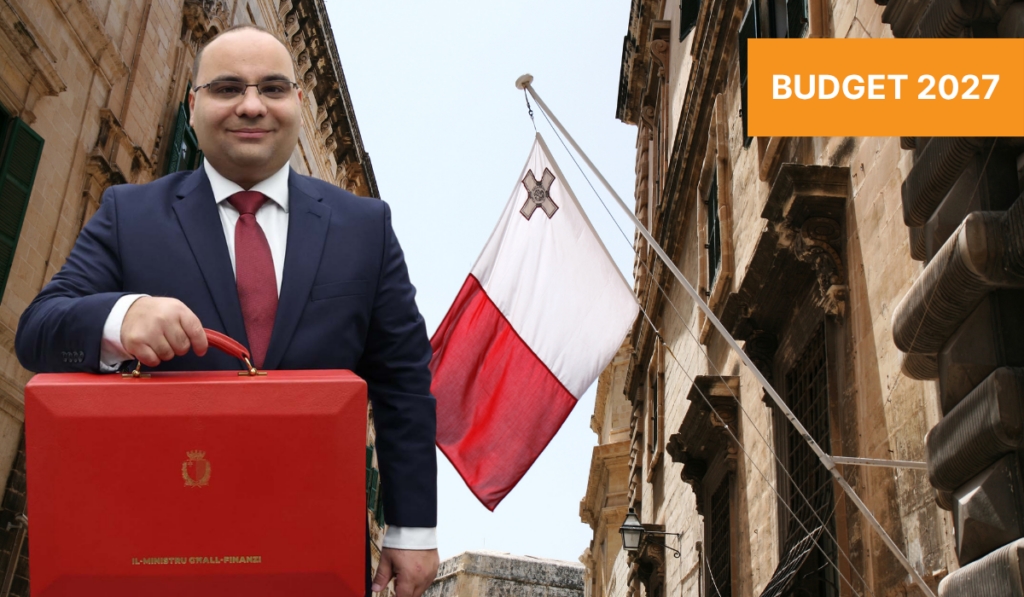
Malta Budget 2027 forecasts economic growth of 3.8% in 2027, supported by tourism, investment and household spending. The Budget also outlines increased government expenditure, inflation projections and changes to tourism charges.
Here’s a breakdown of Malta’s economic outlook for 2027 and what the key figures could mean for workers and businesses.
Malta’s Economy Forecast To Grow By 3.8% In 2027
Malta recorded 4.4% real GDP growth during the first six months of 2026, compared to the EU average of 1.2%. Growth was driven by household consumption, investment, tourism, services and electronic product exports.
According to Malta Budget 2027 projections, the economy is expected to grow by 4.1% in 2026 and 3.8% in 2027. Nominal GDP is forecast to reach €28.1 billion in 2027, up from €24.7 billion in 2025.
Government Revenue And Spending To Increase In 2027
Government revenue is projected to rise from €9.1 billion in 2026 to €10.1 billion in 2027, while recurrent expenditure, including interest payments, is expected to reach €9.4 billion.
Capital expenditure, which includes investment in infrastructure and long-term projects, is forecast to increase from €1.2 billion to €1.5 billion.
Meanwhile, Malta’s government deficit is expected to remain at 2.6% of GDP in 2027, with public debt projected to reach 46.8% of GDP, below the EU’s 60% reference threshold.
Malta Inflation And COLA Increase For 2027
Inflation remains an important factor affecting the cost of living in Malta.
In September 2026, Malta’s inflation rate stood at 2.4%, compared to 3.8% across the euro area.
Inflation is forecast to average 2.5% in 2026 and 2.7% in 2027, meaning consumer prices are expected to continue increasing.
As announced in Malta Budget 2027, the Cost of Living Adjustment (COLA) for 2027 is €6.41 per week, equivalent to €333.32 annually.
Malta Tourism Expected To Continue Growing In 2027
Tourism remains a major contributor to Malta’s economy, with more than 4.5 million tourists expected in 2026, accounting for approximately 28 million overnight stays. Tourist arrivals and overnight stays are projected to increase further in 2027.
From 1st January 2027, the eco-contribution for adult guests staying in hotels and other collective accommodation will be €8 per person per night, capped at €64 per person per stay.
Guests staying in short-let accommodation will pay €10 per night, capped at €80 per person per stay.
The revised tourism charges are expected to generate approximately €182 million in revenue.
Malta Budget 2027 Focuses On Technology And Skills
Malta Budget 2027 places greater emphasis on technology, innovation and skills development as part of efforts to diversify the country’s economy.
For businesses, this could create opportunities to invest in digitalisation and improve productivity. For employees and jobseekers, developing relevant skills may become increasingly important as Malta’s industries evolve.
What Does Malta Budget 2027 Mean For Workers And Businesses?
Malta’s economy is forecast to continue growing in 2027, although at a slightly slower rate than in 2026.
For employees, inflation and COLA will remain important factors affecting purchasing power. Meanwhile, businesses will need to consider changing operating costs alongside opportunities for investment and growth.
Want to stay informed about Malta’s job market? Visit Keepmeposted for the latest job vacancies, career advice and employment updates.